Super Early
Deadline
December 22, 2026
Judging
Date
July 25, 2027
Winners
Announced
August 12, 2027
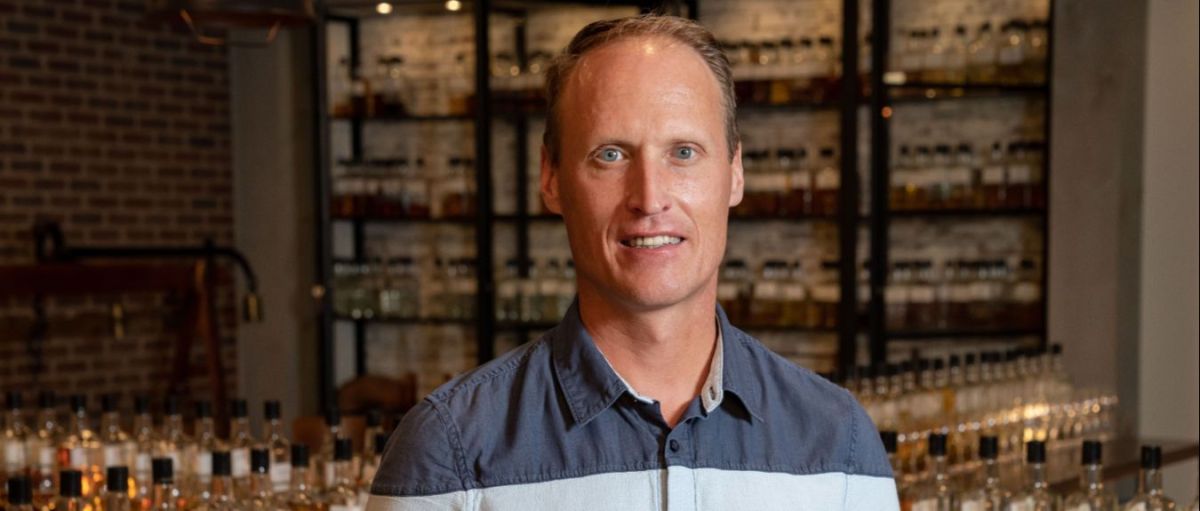
Great whisky begins long before the final blend, with decisions about grain, fermentation, distillation, and the interaction between spirit and wood. For Dr. Don Livermore, Master Blender at Hiram Walker & Sons, understanding those decisions is both a scientific pursuit and a creative responsibility. With a background in microbiology and doctoral research into wood’s influence on whisky, Livermore brings a distinctive perspective to Canadian whisky’s character, versatility, and commercial potential. His work challenges buyers and drinkers to look beyond familiar shortcuts such as age statements and recognize the expertise behind a balanced blend. For the U.S. spirits trade, that perspective raises valuable questions about how quality is assessed, how value is communicated, and how Canadian whisky can earn greater consideration. This feature explores the thinking behind his craft, the discipline required to turn experimentation into compelling products, and the opportunities for connecting Canadian whisky with a new generation of American consumers.
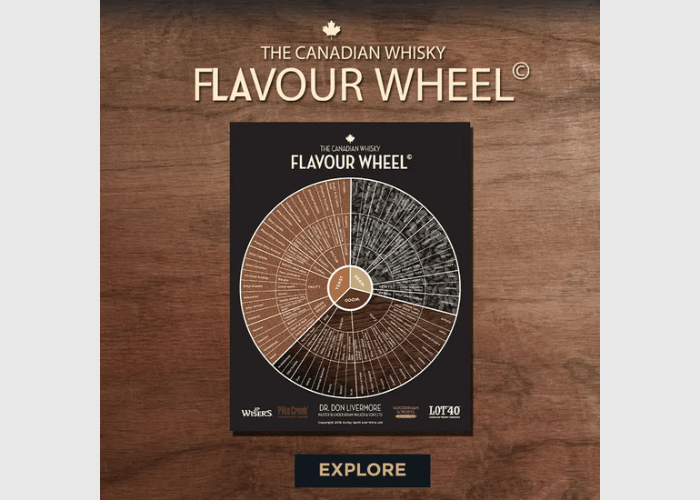
As a Master Blender, I use the Canadian Whisky Flavour Wheel as my guide when creating new whiskies. Depending on the flavour profile I want to achieve, I can draw on three key tools: grain, yeast, and wood.
Yeast is often called the heartbeat of the distillery because it converts sugars into alcohol. However, its role goes far beyond producing ethanol. Fermentation conditions such as temperature, pH, nutrients, time, and even the yeast’s genetics can influence the production of flavour compounds that contribute character and complexity to the spirit.
One unique aspect of Canadian whisky production is that we don't typically use traditional mash bills like those found in bourbon. Instead, we ferment, distill, and mature each grain separately. Corn, rye, wheat, barley, and malt are all produced as individual whiskies before being blended together. This approach gives us tremendous flexibility, allowing us to create innovative recipes by selecting and combining flavours from a diverse inventory of whisky components.
When it comes to maturation, Canadian regulations offer additional creative freedom. Whisky can be matured in wooden casks of less than 700 litres, and we are not limited to new white oak barrels. We can use a variety of cask types, including barrels that previously held wine or other spirits. These casks can add subtle layers of flavour and help create unique expressions.
It is difficult to identify a single most important step in whisky creation because every stage contributes to the final character of the spirit. From a blender’s perspective, success depends on having access to a diverse inventory of well-aged whiskies. A broad range of flavour components allows us to innovate, respond to changing consumer preferences, and create new flavour experiences. Ultimately, my responsibility is not only to make great whisky today, but to leave the inventory in an even stronger position for the blenders who follow.
The perception gap many American consumers have about Canadian whisky stems from the difference between the category's historical identity and what Canadian whisky has become today.
In its earliest days, Canadian whisky was often an unaged spirit made from mixed grains and distilled in pot stills, much like what we'd call moonshine today. As the industry matured through the mid-1800s, Canadian distillers recognized that consumers preferred a lighter, smoother whisky. The technology and techniques of the time pointed to distillation as the solution. Distillers increasingly adopted multi-column distillation systems, creating whiskies that were cleaner, lighter, and easier to drink than many of their international counterparts.
That style became the foundation of Canadian whisky's reputation, particularly in the United States. For generations, American consumers came to associate Canadian whisky with a light, smooth flavor profile, and many of the classic Canadian brands were built around that tradition.
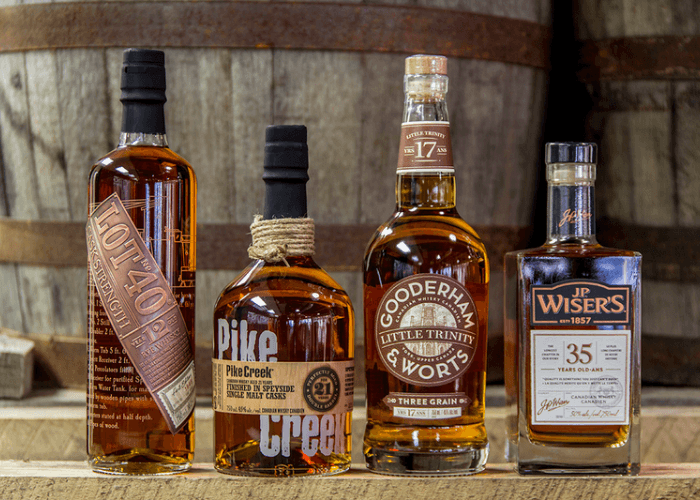
What is often overlooked is that Canadian whisky is not limited to that style. Modern Canadian distillers have an extraordinary range of tools at their disposal, allowing them to create virtually any flavour profile imaginable. Brands such as Lot No. 40 showcase the bold, spicy character of 100% rye whisky. Pike Creek 10 Year Old Rum Barrel Finish demonstrates the impact of innovative cask finishing. Meanwhile, whiskies such as J.P. Wiser's 10 Year Old can deliver a richer profile that appeals to consumers who enjoy low-rye bourbon styles.
Closing the perception gap ultimately comes down to three things: putting great whisky in people's glasses, educating consumers about the diversity of Canadian whisky, and ensuring these products are widely available. Once consumers experience the breadth of styles being produced in Canada today, they quickly realize that Canadian whisky is far more diverse than its traditional reputation suggests.
Source: Whiskey University
Blending gives you tremendous control over the final flavour profile, but not all whisky components have the same impact. One of the most important lessons a Master Blender learns is understanding which whiskies are going to move the needle and which ones require larger adjustments.
Our inventory contains whiskies created from different grains, distillation methods, barrel types, and ages, some of which have been maturing for decades. That diversity allows us to create remarkably consistent products, but it also means every component brings a different level of intensity to a blend.
For example, lighter whiskies produced through highly refined distillation or younger maturation often require relatively large adjustments before you notice a significant change in the final profile. On the other hand, a robust rye whisky, a heavier distillate, or a particularly influential cask can have a dramatic impact with only a small addition. Sometimes changing a recipe by just a few percentage points can completely alter the aroma, palate, or finish.
Knowing how each component behaves is where experience becomes invaluable. A Master Blender develops an understanding of how individual whiskies interact with one another and how those interactions evolve over time.
As for whether a change makes a whisky "better," that's often subjective. A blender can improve balance, highlight certain flavours, or create a profile that better matches the intended style, but whisky enjoyment remains personal. What one consumer considers an improvement, another may see as a departure from the character they loved in the original. The role of the blender is not necessarily to create a whisky everyone will agree is better, but to create a whisky that delivers the intended experience as successfully as possible.
When evaluating whisky, it's important to recognize that quality is rarely determined by one person's opinion. At our distillery, whisky assessment is a team effort involving sales, marketing, operations, finance, quality, and blending. Together, we define the style and quality targets for a whisky before it ever reaches the consumer.
From there, consistency and quality are supported by a highly trained sensory panel. Samples are evaluated blind in dark blue glasses to eliminate visual bias and scored against established standards. Our panel assesses more than 8,000 samples each year, and the process has been refined through more than 160 years of whisky production. That gives us confidence that a whisky is technically correct, free from defects, and delivering the profile it was designed to achieve.
For retail buyers, my advice is to think less about what you personally enjoy and more about what your customers are seeking. The best whisky on the shelf is not necessarily the one that appeals most to the retailer, but the one that resonates with the consumer. Understanding whether your customers prefer bold rye spice, rich oak influence, sweeter bourbon-like profiles, or lighter, easy-drinking whiskies should guide purchasing decisions.
That's why I spend so much time at whisky festivals, master classes, tastings, and consumer events. Listening to how people drink whisky, what flavours excite them, and what occasions they are buying for provides insights that no sensory panel can fully capture. Knowing your customer is ultimately just as important as knowing the whisky itself.
Source: J.P. Wiser’s
The Canadian Whisky Flavour Wheel teaches us that wood influences whisky through three primary mechanisms: age, finishing, and cask treatment such as toasting or charring. Consumers often focus on the number of years on a label or the type of cask listed, but these descriptions tell only part of the story. The greater question is how the cask was used and where the whisky matured.
Many consumers ask about terroir and expect the discussion to focus on grain origin. While grain certainly contributes flavour, the maturation environment often has a far greater influence on the final character of a whisky. In warehouses that are not temperature-controlled, the spirit follows the annual heating and cooling cycle of the local climate. As temperatures rise, chemical reactions accelerate, promoting the formation of compounds such as acetaldehyde and ethyl acetate, which contribute fresh green apple and pear-like notes. Warmer climates generally produce these characteristics more rapidly, and the longer the whisky ages, the greater their accumulation. This is why a 12-year-old whisky aged in one location may taste dramatically different from a 12-year-old whisky aged elsewhere.
Cask finishing adds another layer of complexity. Although the term "finishing" suggests that flavour is being created, the process is largely driven by diffusion. When whisky is transferred into a cask that previously held wine, sherry, rum, or another spirit, flavour compounds trapped within the wood move into the whisky from an area of high concentration to low concentration until equilibrium is reached. This transfer occurs surprisingly quickly, often within a few hundred days. Finishing is therefore an effective way to add flavour and complexity to an already mature whisky.
Age also changes flavour through concentration. Over time, water and alcohol evaporate from the cask in what is known as the angel's share. As volume decreases, flavours from the original distillate, wood extracts, and finishing casks become more concentrated, much like reducing a sauce in cooking. The cask does not continually contribute new finishing flavours indefinitely; rather, the existing flavour compounds become increasingly concentrated as evaporation progresses.
The final wood influence comes from charring and toasting. More than half of wood consists of cellulose and hemicellulose, which are carbohydrates. When heated, they thermally degrade through Maillard, Strecker, and caramelization reactions to create compounds associated with vanilla, caramel, toffee, baking spices, and roasted dessert notes. Temperature and heat exposure duration determine the balance and intensity of these flavours.
So rather than simply asking, "How old is it?" or "What cask was it finished in?", consumers should ask:
- Where was the whisky matured?
- Was the warehouse temperature controlled?
- What type of cask was used and how many times had it been filled previously?
- How long was the whisky finished?
- What level of toast or char was applied to the barrel?
- How much of the flavour comes from maturation versus finishing?
Those questions reveal far more about a whisky's flavour and quality than an age statement or cask description alone. In many ways, wood is not a single ingredient but an entire flavour-development system, and understanding how that system was managed tells you much more about the whisky in your glass.
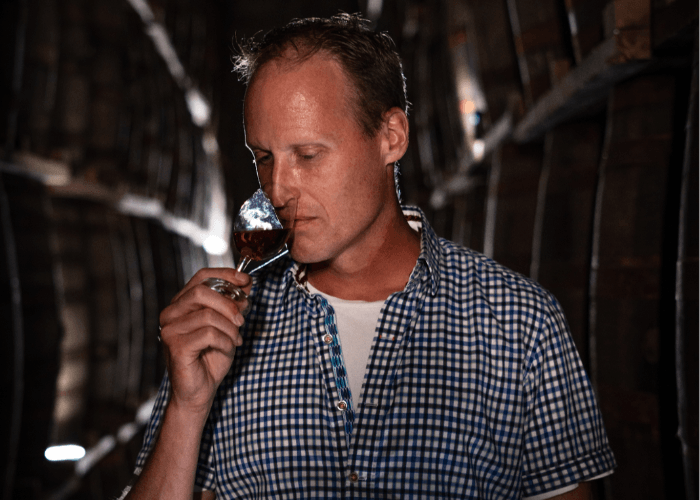
Meaningful complexity is ultimately determined by the consumer. What one whisky drinker finds compelling, another may view as unnecessary. That is why market research and conversations with whisky enthusiasts, or uisgephiles, are so important. As blenders, we can create interesting flavour combinations, but they only become meaningful if they resonate with the people who will ultimately enjoy them.
Innovation often begins by observing consumer preferences. If a particular style of spirit has a strong following in a certain market, I become interested in exploring whether the flavours from that spirit can complement one of our whiskies. The objective is not simply to create a story, but to create a flavour experience that consumers genuinely value.
A recent example is the fifth release in the Lot No. 40 Cask Strength Rye Exploration Series, where we finished our 100% rye whisky in Cognac casks. Cognac is highly appreciated in certain regions, and we believed its rich fruit and oak character could complement the bold spice of Lot No. 40 rye. The result delivered on several consumer needs simultaneously: flavour intensity from the combination of 100% rye and Cognac influence, the demand for cask-strength whisky, and the collectability that enthusiasts often seek in limited releases.
Before any innovation is ready for release, it must satisfy far more than flavour alone. The liquid has to align with a consumer need, fit within the brand's identity, and be commercially viable. Just as importantly, it requires alignment across the entire organization. Marketing must be able to communicate the story, sales must understand the opportunity, operations must be able to execute consistently, procurement must secure the required materials, quality must ensure the product meets our standards, and R&D must validate the technical success of the innovation.
For me, a whisky is ready for release when the flavour is compelling, the consumer relevance is clear, and every function within the business understands how to bring that whisky successfully to market. At that point, it becomes more than an interesting experiment. It becomes a product worth putting in consumers' glasses.
As a Master Blender, my role is to create and innovate whiskies. Determining the commercial price of a permanent product or a limited collectible release is generally outside my scope. Pricing strategy is developed by our brand, commercial, and customer teams, while my responsibility is to ensure that every whisky delivers quality and value without compromise.
From a production perspective, value is not defined by price alone. An accessible whisky should deliver consistency, balance, and enjoyment at an affordable price point. A premium whisky may justify a higher price through longer maturation, more selective cask management, greater complexity, or unique production techniques. Collectible whiskies often add another dimension, whether through rarity, limited inventories, unusual cask treatments, historical significance, or the inability to recreate that exact liquid in the future.
Consumers should not assume that a more expensive whisky will always provide a better drinking experience. Taste is highly personal. A whisky that perfectly suits one person's preferences may cost far less than a rare collectible bottle. What consumers can reasonably expect from a higher-priced whisky is greater scarcity, increased production costs, more time in inventory, or a unique story and experience that cannot easily be replicated.
Ultimately, pricing is determined by the marketplace through retailers, bars, restaurants, and consumers themselves. My focus is much simpler: create the best whisky possible for the intended consumer and occasion. If a whisky delivers flavour, quality, and enjoyment that exceeds expectations for its price point, then it has delivered value regardless of whether it is an everyday bottle or a highly sought-after collectible release.
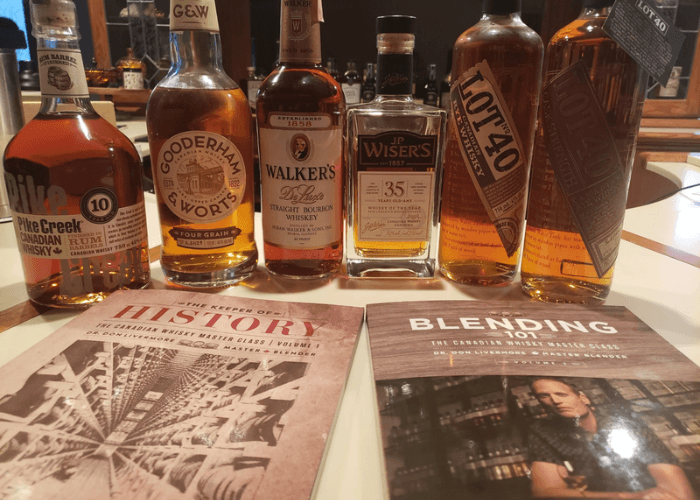
Source: ABV Network
I often describe Canadian whisky production using the analogy of a local paint store. When a customer selects a paint colour, the retailer starts with a base and adds measured amounts of different pigments to create the exact shade desired. Canadian whisky works much the same way. We can produce individual grain whiskies, mature them separately, and then blend them to create virtually any flavour profile imaginable.
Bourbon, by comparison, is more like buying paint that is already mixed. The grains are combined in a mash bill at the beginning, fermented together, distilled together, and aged together. Once that process starts, there is far less flexibility to adjust flavour direction. The beauty of Canadian whisky is that blending gives us an incredible range of creative possibilities and flavour outcomes.
If I were introducing a U.S. retailer to Canadian whisky, I would select a couple of whiskies that demonstrate the breadth of the category and appeal to consumers.
J.P. Wiser's 10 Year Old would be the starting point. This whisky is an excellent bridge for bourbon drinkers because it delivers a flavour profile similar to a low-rye bourbon style. Matured in a combination of Canadian whisky casks, bourbon barrels, and new white oak, it offers notes of vanilla, caramel, and oak while maintaining the smoothness that Canadian whisky is known for. At ten years old, it also represents exceptional value and serves as an approachable everyday sipping whisky.
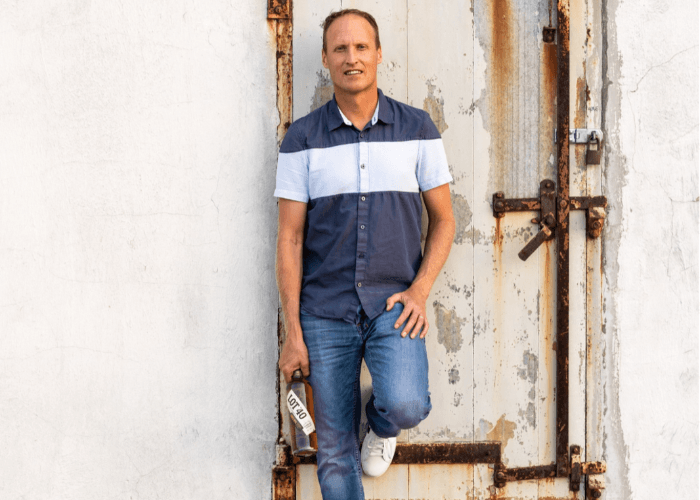
Lot No. 40 would be another choice. This whisky showcases the bold side of Canadian whisky through 100% rye grain, column and pot distillation, and maturation in new oak casks. The result is a whisky packed with rye spice, baking spice, vanilla, and depth of flavour. It appeals to enthusiasts looking for a more robust whisky experience and performs exceptionally well in classic cocktails such as the Manhattan and Old Fashioned. It demonstrates that Canadian whisky can be every bit as distinctive and flavourful as any rye whisky in the world.
There are some one-off releases of Lot No. 40 aged in various types of casks. We call this our rye exploration series. Examples of casks used in the exploration series are peated quarter casks, Oloroso Sherry, Port, Cherry, and Cognac. These expressions are hard to find, but they showcase how finishing can add layers to the flavour profile and complexity to Canadian whisky.
Together, these bottles tell the story of modern Canadian whisky. J.P. Wiser's 10 Year Old introduces the category through familiarity, and Lot No. 40 highlights the bold character that Canadian rye can achieve. Collectively, they demonstrate that Canadian whisky is not a single style, but a category capable of delivering an extraordinary range of flavours and drinking occasions.
Cocktail performance should absolutely influence blending decisions, but it should not be the only consideration. When designing a Canadian whisky, I work closely with our marketing and commercial teams to understand the consumer need and intended drinking occasion. We develop a project brief, and part of that discussion is often whether the whisky is intended primarily for sipping, cocktails, or both.
If the objective is to create a whisky that excels in classics such as an Old Fashioned or Manhattan, I look for whisky components that can complement and balance the sweetness, bitterness, and aromatic elements introduced by the bartender. In those cases, I typically lean toward a more rye-forward style because rye naturally provides spice and structure that can stand up to sugar and vermouth. I also like incorporating whiskies matured in new oak because they contribute vanilla, caramel, and tannin characteristics that give the whisky a backbone and prevent it from being overwhelmed by bitters or other cocktail ingredients.
For a whisky to retain its identity in a cocktail, it needs to have a distinctive flavour signature before it ever reaches the mixing glass. If the whisky is too delicate, the cocktail becomes defined by the modifiers rather than the spirit itself. The best cocktail whiskies continue to express their grain character, maturation profile, and texture even after dilution and mixing.
At the same time, I believe a great whisky should never be designed exclusively for cocktails. It should still be compelling when tasted neat. That balance comes from having enough complexity and structure to stand up in a mixed drink while maintaining the harmony and drinkability expected from a sipping whisky.
If I were to point to two examples from our portfolio, I would start with J.P. Wiser's 10 Year Old. It is one of our most versatile whiskies, offering enough oak, rye, and maturity to work beautifully neat, on the rocks, or in classic cocktails. It adapts well because the underlying blend is balanced and approachable.
For a more cocktail-focused expression, I would choose Lot No. 40. Its 100% rye composition, column and pot distillation, and maturation in new oak create a bold and distinctive flavour profile that shines through in cocktails. Whether in a Manhattan or an Old Fashioned, the rye spice remains the focal point, which is exactly what many bartenders and whisky enthusiasts are looking for.
Ultimately, the goal is not to create a whisky that simply survives in a cocktail. The goal is to create one that elevates the cocktail while remaining enjoyable on its own. When a whisky can do both, it gives consumers and bartenders the greatest flexibility and delivers the most value.
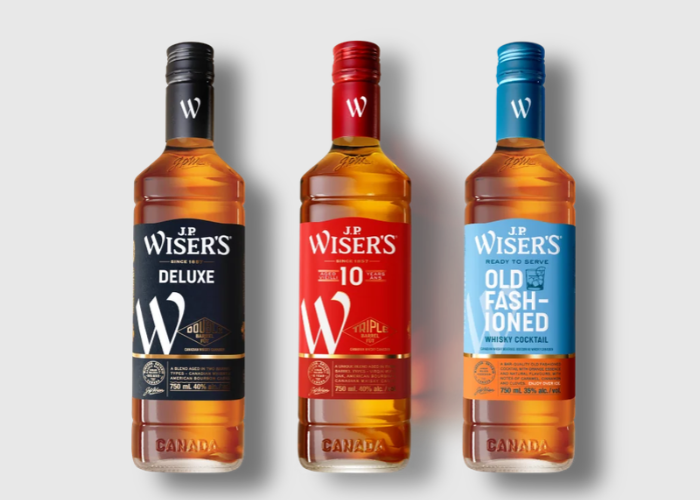
Source: J.P. Wiser’s
Canadian whisky is arguably the most innovative, creative, and adaptable style of whisky in the world. Our regulations provide tremendous freedom. The spirit must be made from grain, fermented, distilled, and aged in Canada, matured in a wooden cask of less than 700 litres, and aged for a minimum of three years. Beyond that, we are not restricted to specific mash bills, distillation methods, distillation strengths, or even particular types of wood. We can use column stills, pot stills, or any combination of the two, and we can mature whisky in a wide variety of casks. That flexibility creates extraordinary diversity within Canadian whisky and, in many ways, reflects Canada itself.
The challenge is that every decision made today may not reveal its full value for five, ten, or even twenty years. My role as Master Blender is to ensure that all the necessary tools are available when they are needed. That means laying down inventory not only for today's demand, but for opportunities that may emerge years into the future.
Planning begins with listening. Consumer and customer insights help identify emerging trends and opportunities. At the same time, those ambitions must be balanced against operational capabilities, procurement realities, financial constraints, marketing priorities, and quality expectations. It is a constant exercise in weighing risk versus opportunity.
Experimentation is an important part of that process, but it must be disciplined. Every innovative cask treatment, grain type, fermentation approach, or distillation method occupies warehouse space and ties up inventory for years. The objective is not to create experiments for their own sake, but to build a portfolio of future options. Some innovations will eventually become commercial successes, while others simply expand our understanding and help inform future decisions.
Balancing creative freedom with inventory discipline ultimately comes down to stewardship. I view the Master Blender as the control point at the centre of the whisky production process, connecting consumer needs, operations, quality, finance, procurement, marketing, and innovation. My responsibility is to ensure we have the right inventory, in the right quantities, with the right flavour profiles, so that future blenders have the flexibility to respond to a changing marketplace.
In the end, successful inventory management is not about predicting the future perfectly. It is about creating enough diversity and optionality within the inventory that, whatever the future brings, you have the tools available to create the right whisky at the right time.
While I am not directly involved in how shelf space is allocated in the U.S. market, I believe the strongest argument for Canadian whisky is its ability to offer consumers a broad spectrum of flavour profiles and drinking experiences. Few whisky categories have the same degree of flexibility in production. Canadian whisky allows producers to create everything from light and approachable whiskies to bold 100% rye expressions, innovative cask finishes, and highly mature age-stated releases.
Heritage and awards can certainly help introduce a brand, but repeat sales are driven by consumers returning to the bottle after the first purchase. The most compelling evidence for a retailer is a proven track record of products that resonate with consumers at multiple price points and occasions.
In Canada, we've seen numerous examples where whiskies initially built a following through grassroots consumer interest before becoming established products. Expressions such as J.P. Wiser's 10 Year Old, J.P. Wiser's 12 Year Overproof, and our older limited releases have demonstrated that consumers are willing to return when a whisky consistently delivers quality, flavour, and value.
I would also point to the breadth of the Canadian whisky portfolio itself. For a retailer, success is often driven by attracting different consumers rather than relying on a single style. Canadian whisky can satisfy consumers looking for a bourbon-like profile, those seeking cask-finished whiskies, and enthusiasts searching for bold rye expressions such as Lot No. 40. This diversity provides multiple pathways to repeat purchase and category growth.
From my perspective as a Master Blender, the strongest evidence of a credible repeat-sales opportunity is simple: consumers continue to buy the product after the novelty wears off. Awards may generate trial, and an interesting story may create curiosity, but only flavour, quality, consistency, and value create loyalty. Canadian whisky has repeatedly demonstrated that it can deliver everyday value, premium age-stated quality, and collectible limited releases, often at price points that compare very favourably with competing whisky categories.
Ultimately, if I were speaking with a retailer, I would focus less on awards and more on demonstrating that Canadian whisky offers three things consumers consistently reward: great flavour, broad stylistic diversity, and strong value for money. When those elements are present, repeat sales tend to follow naturally.
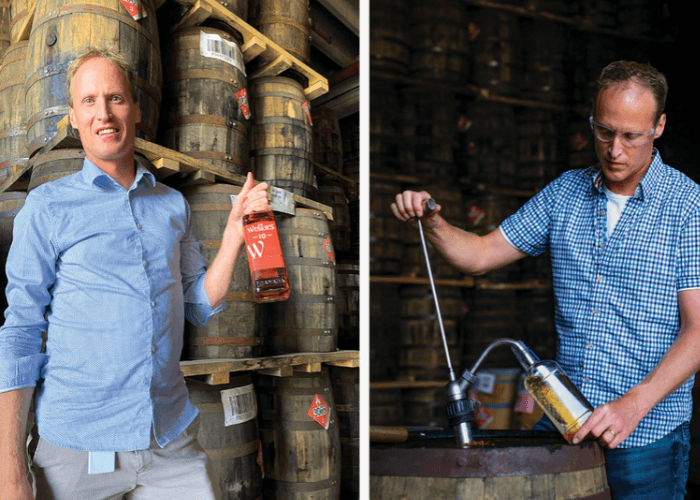
Source: Poured Canada
One of the greatest lessons I've learned over three decades in the whisky industry is that you should never stop trying to make whisky better. When I started, I probably viewed many production methods and practices as fixed traditions. Today, I see them as opportunities for continuous improvement.
Innovation is one of the most enjoyable aspects of being a Master Blender. I'm always interested in understanding what consumers and enthusiasts are looking for next and how we can create new flavour experiences that exceed their expectations. Over time, I've come to appreciate that innovation isn't always visible to the consumer. Sometimes the most meaningful improvements happen behind the scenes through better processes, improved quality systems, more consistent production, enhanced sustainability, or greater efficiency. If those changes improve value, quality, consistency, or flavour, then they matter.
Perhaps the belief I've changed most is that success comes from finding the right answer. Today, I believe success comes from continually questioning the answer. The whisky industry has a long history, but history should be a foundation for innovation, not a reason to stop innovating.
For the next generation of blenders, I hope they challenge assumptions that my generation accepted as fact. I hope they continue exploring new grains, new yeast strains, new distillation approaches, new maturation techniques, and new ways of understanding flavour. I hope they embrace science while respecting tradition, and recognize that the two are not mutually exclusive.
The moment a Master Blender becomes satisfied and stands still is the moment someone else passes them. Our responsibility is not only to preserve the knowledge we've inherited, but to leave the industry stronger than we found it. If the next generation questions what we did, improves upon it, and creates better whisky because of it, then we've done our job well.
Also Read:
Michael Myers On Colorado Whiskey, High Proof, And The Next Chapter For Distillery 291
Papa’s Pilar Blonde Rum Redefines Light Rum with Craft, Character, and a Deep Sense of Story
Bismarck Distillery: From Local Innovation to National Recognition
2026 USA Spirits Ratings Winners Announced. Congratulations to all the winners!